
What is Chi Sau? A Complete Guide to Wing Chun Sticking Hands
Chi Sau — "Sticking Hands" — is the most famous training method in Wing Chun, yet widely misunderstood. Far from sparring, it is a sophisticated sensitivity drill that teaches practitioners to feel and react to an opponent's force instinctively. Learn how Chi Sau bridges the gap between forms practice and real self-defence.
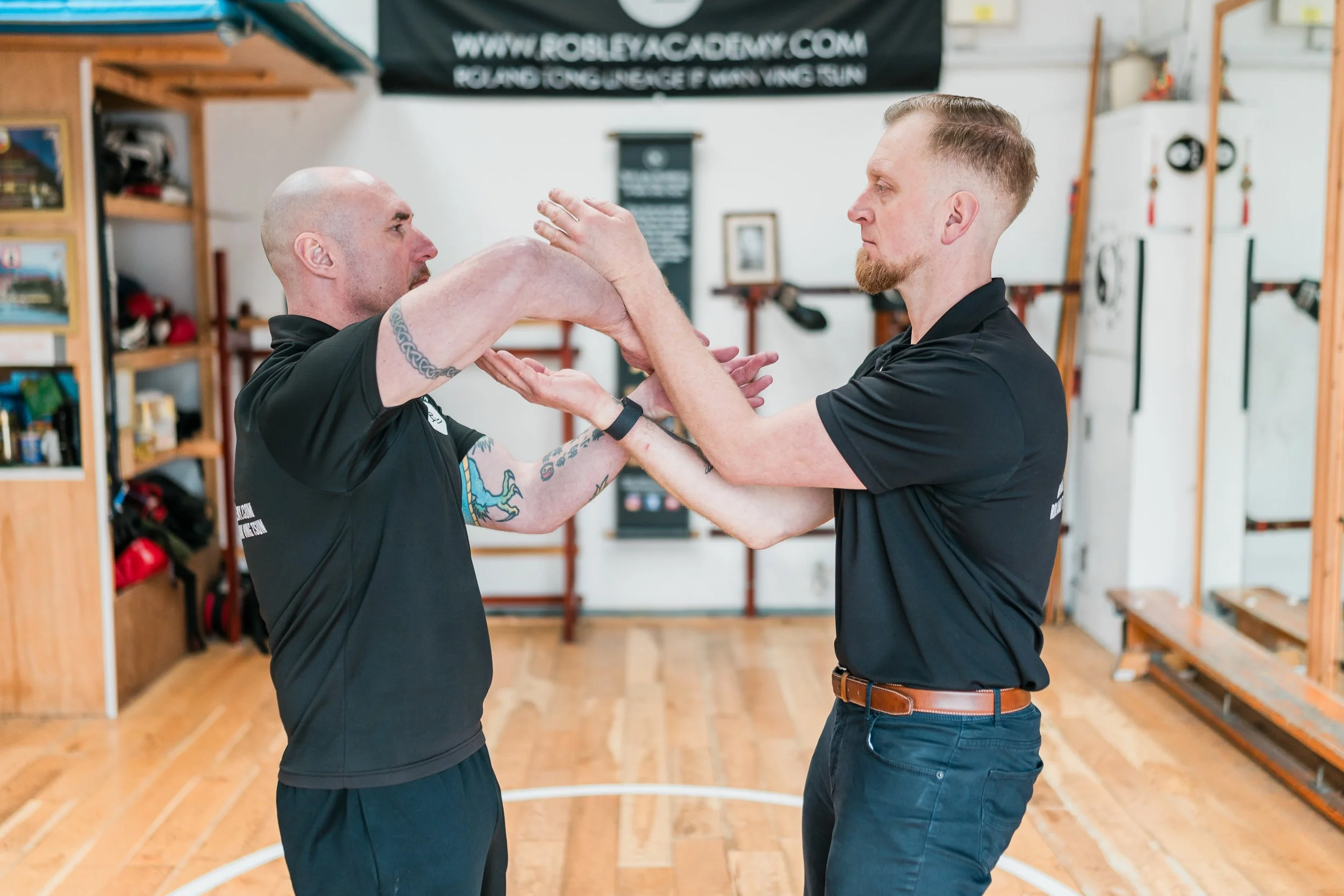
Chi Sau, or "Sticking Hands," is arguably the most famous and misunderstood training method within the Wing Chun system. Often mistaken for sparring or a competitive game, Chi Sau is actually a sophisticated sensitivity drill designed to bridge the gap between practicing solo forms and engaging in live combat. It is the laboratory where Wing Chun practitioners test their structure, timing, and reflexes under dynamic pressure.
The primary objective of Chi Sau is to develop tactile sensitivity, known as "listening energy" (Ting Jin). In a real self-defence situation, visual reaction time is often too slow to counter a rapid, close-range attack. By maintaining constant contact with an opponent's arms, a Wing Chun practitioner learns to feel the direction, intent, and amount of force being applied. This allows them to react reflexively, redirecting the opponent's energy and finding the most direct path to strike, all without relying on conscious thought.
During Chi Sau practice, students utilise techniques learned in the forms, such as Bong Sau (Wing Arm), Tan Sau (Palm up Hand), and Fook Sau (Subduing Hand), in a continuous, flowing loop. As proficiency increases, practitioners introduce attacks, traps, and counters, such as the Kwan Sau (Rotating/Rolling Hand/Arm) to defend against cover-and-hit strategies. At the Rob Ley Academy, we view Chi Sau as an essential tool for eliminating bad habits. It immediately exposes flaws in a student's structure…. if you use too much muscular tension, you will be easily manipulated, and if your structure is weak, your defence will collapse.
Mastering Chi Sau requires patience, humility, and expert guidance. It is not about winning or dominating a training partner, but about mutual development and understanding the underlying principles of the art. For those looking to rapidly accelerate their Chi Sau skills, our Intensive Training Programs (ITPs) in Cornwall offer dedicated, one-on-one instruction focused entirely on refining this critical aspect of Ip Man Wing Chun.
What is Sil Lim Tao and Why Is It the Foundation of Wing Chun?
For anyone beginning their journey in Ip Man Wing Chun, the first and most critical step is mastering Sil Lim Tao, often translated as the "Little Idea" form. As the foundational empty-hand form of the system, it serves as the blueprint for everything that follows. Without a deep understanding of Sil Lim Tao, advanced techniques like Chi Sau (Sticking Hands) or the later forms will lack the necessary structure and power.
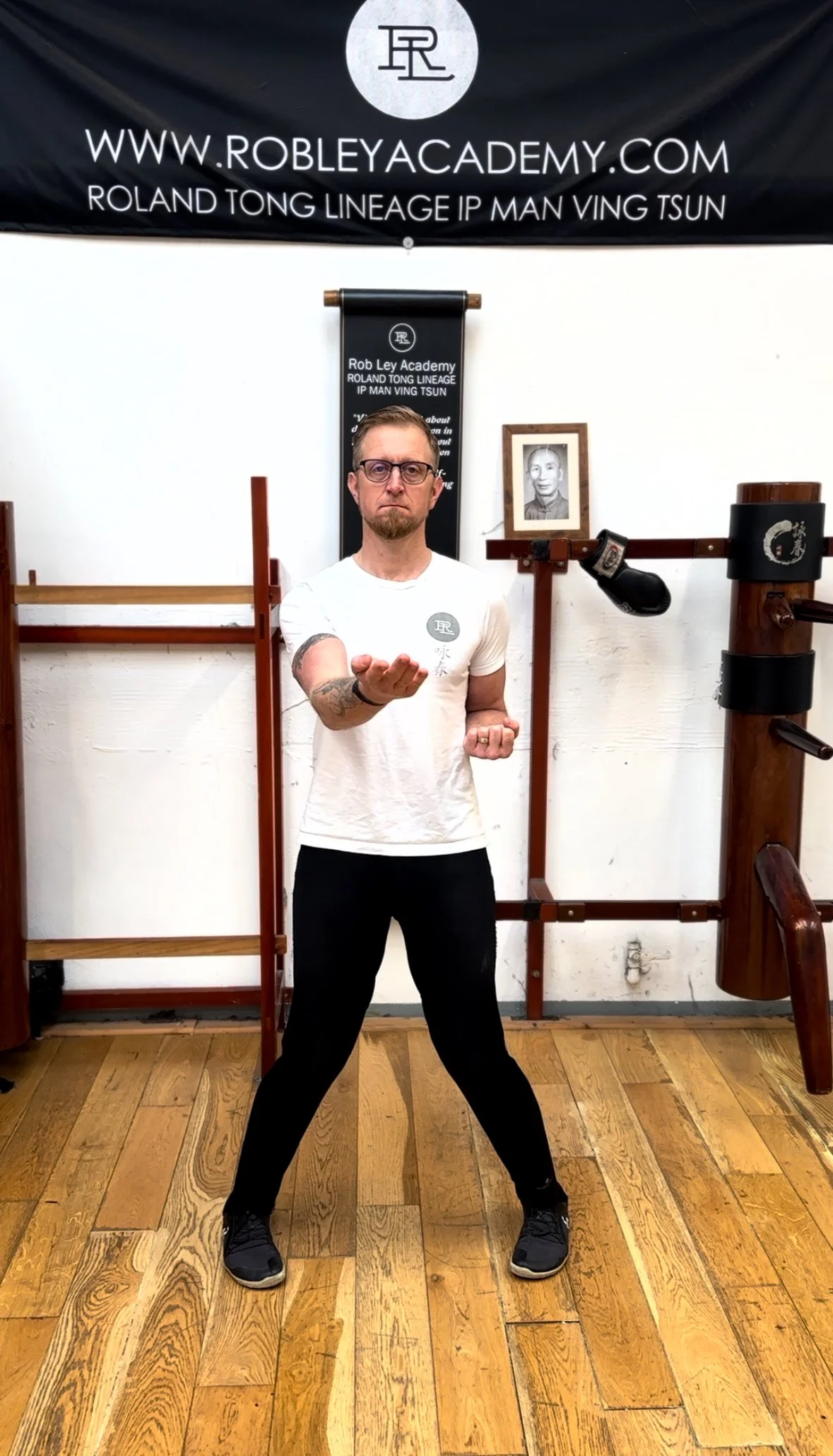
Sil Lim Tao is performed entirely from a stationary stance, known as the Yee Gee Kim Yeung Ma. This deliberate lack of stepping forces the practitioner to focus entirely on upper body mechanics, correct elbow positioning, and the generation of internal energy. The form introduces the core hand techniques of Wing Chun, including Tan Sau (Palm Up Hand), Fook Sau (Subduing Hand), and Bong Sau (Wing Arm). By practicing these movements slowly and mindfully, students develop the neuromuscular pathways required for rapid, reflexive combat.
At the Rob Ley Academy, we emphasise that Sil Lim Tao is not merely a sequence of movements to be memorised and rushed through. It is a meditative practice that cultivates focus, relaxation, and structural integrity. The "Little Idea" refers to the concept of concentrating the mind on a single, pure intention. When a student performs the form correctly, they are learning how to align their skeletal structure to absorb and redirect force effortlessly, rather than relying on muscular strength.
The benefits of dedicated Sil Lim Tao practice extend far beyond the Kwoon (training hall). Students frequently report improved posture, reduced physical tension, and a calmer, more focused mind. Whether you are training in our Cornwall headquarters or through our Digital Training Manual, dedicating time to Sil Lim Tao is the most effective way to ensure your Wing Chun journey is built on an unshakable foundation.
What to Expect in Your First Wing Chun Class
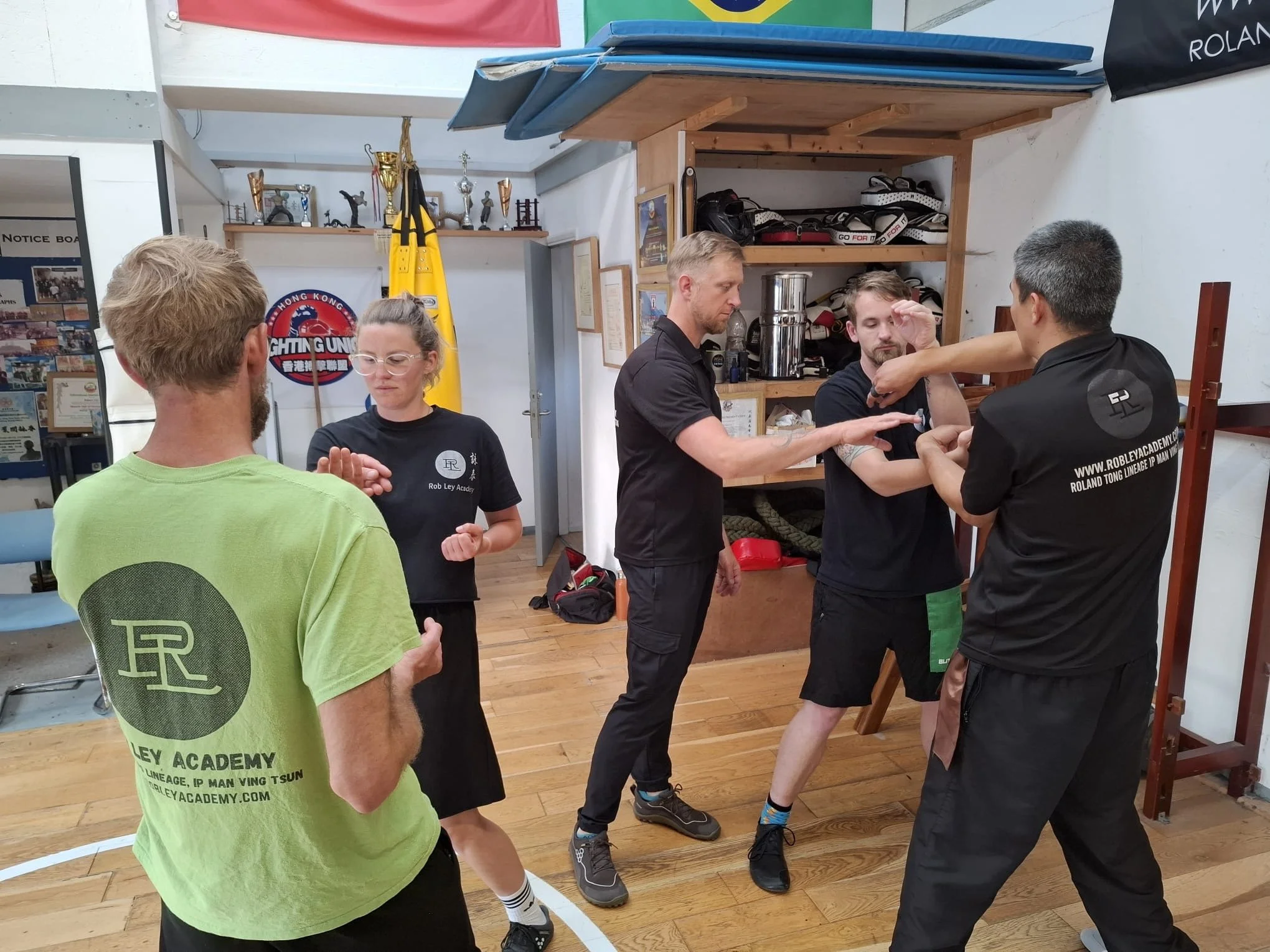
Thinking about trying Wing Chun/ Ving Tsun Kung Fu, but not sure what to expect? At Rob Ley Academy, we make it easy for beginners to get started. Your first class will focus on the basics: posture, movement, and simple techniques. We’ll then introduce you to the Sil Lim Tao (Little Idea) form and explain how Wing Chun principles apply to self-defence and everyday life. There’s no pressure to perform—just a supportive environment where you can learn at your own pace. Our experienced students and instructors are always here to help. Come in comfortable clothes, bring an open mind, and get ready to discover what you’re capable of.

Rob Ley teaching Wing Chun basics to new students at Rob Ley Academy in Cornwall.
The Resilience of Tradition: Ving Tsun in Modern Life
In today's fast-paced world, the quest for balance and inner strength is more relevant than ever. As we navigate the complexities of modern life, it's essential to explore practices that not only sharpen our physical abilities but also fortify our mental and emotional well-being. Enter Ving Tsun, a martial art with deep historical roots and invaluable lessons for our contemporary lives.
The Art of Adaptation
Ving Tsun, also known as Wing Chun, is a martial art known for its practicality and efficiency. Its adaptability is a quality that resonates strongly with the challenges of modern life. As we face diverse situations and uncertainties, the principles of Ving Tsun serve as a guide to adapt, respond, and thrive.
Mental Resilience
In a world filled with constant distractions and stressors, the mental resilience developed through Ving Tsun training is a valuable asset. Practitioners learn to stay focused, calm, and composed, no matter the circumstances. This mental fortitude extends far beyond the training floor, helping individuals tackle daily challenges with confidence.
Discipline and Routine
One of the most significant benefits of martial arts practice is the cultivation of discipline and routine. Ving Tsun instills a sense of dedication and commitment, urging practitioners to stick to their training regimens. In the realm of modern life, where multitasking and distractions are the norm, this discipline becomes a cornerstone for personal and professional success.
Physical Fitness for a Sedentary Age
Sedentary lifestyles and desk-bound work have become all too common in modern society. Ving Tsun provides an antidote to this issue, promoting physical fitness, flexibility, and balance. Regular training helps counteract the negative effects of prolonged sitting, enhancing overall well-being.
Conflict Resolution and Stress Management
Modern life often presents conflicts, whether in the workplace or personal relationships. Ving Tsun's emphasis on controlled responses, strategic thinking, and de-escalation techniques equips practitioners with valuable conflict resolution skills. This art encourages individuals to address stressful situations with a clear mind and a composed demeanour.
Community and Camaraderie
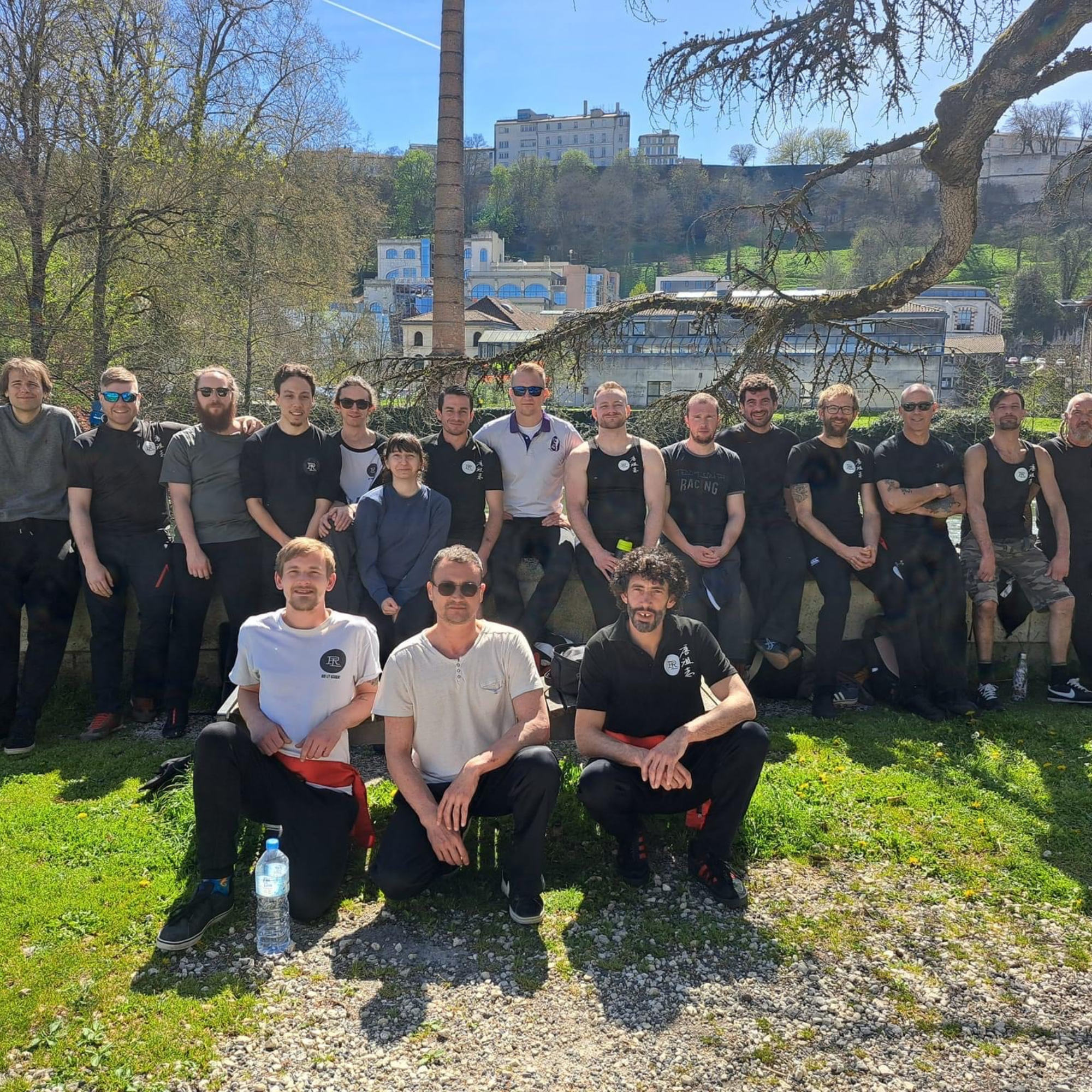
In an era marked by digital connections, the sense of community fostered within Ving Tsun schools is invaluable. Students form lasting bonds and friendships, transcending the digital divide. The support and camaraderie among practitioners add a sense of belonging to their lives, promoting mental and emotional well-being.
The Mindful Approach
Perhaps most significantly, Ving Tsun encourages a mindful approach to life. Practitioners learn to be present, to focus on the task at hand, and to move with intention. In a world where distractions are the norm, this practice offers a sanctuary of mindfulness.
Conclusion
In the whirlwind of modern life, Ving Tsun is more than a martial art; it's a holistic practice that equips us to navigate the challenges of the present and future. By embracing its teachings, individuals can find a path to physical vitality, mental resilience, and a more grounded, centred approach to modern living.
So, whether you're a seasoned practitioner or someone seeking balance in a hectic world, Ving Tsun welcomes you to explore its timeless wisdom and apply its lessons to the modern journey of life. Embrace the tradition, adapt to the present, and empower your future with Ving Tsun.
By Sifu Robert Ley

Sil Lim Tao
I have trained In Wing Chun for many years, seeing and training with people from varying styles of the Wing Chun system. I have had the pleasure of being comprehensively trained by Grand Master Roland Tong in Ip Man Ving Tsun. With the aim to preserve and Promote Ip Man Wing Chun as taught to me.

I have trained In Wing Chun for many years, seeing and training with people from varying styles of the Wing Chun system. I have had the pleasure of being comprehensively trained by Grand Master Roland Tong in Ip Man Ving Tsun. With the aim to preserve and Promote Ip Man Wing Chun as taught to me.
Sil Lim Tao (Little Idea) is the first of the three empty hand forms of Wing Chun. It is divided into three sections although between different styles of Wing Chun the individual movements can vary as can their purpose and applications. Sil Lim Tao teaches the core techniques of the Wing Chun System, offensive and defensive as well as the correct structural alignment of the body throughout these movements. Done correctly the form should take around fifteen minutes to complete. Students often struggle with understanding the importance of Sil Lim Tao. In essence, it is the foundation for the entire Wing Chun system and without it the other forms will not work correctly and should be practiced daily by any serious Wing Chun practitioner.
The Training Stance (Yee Gee Kim Yeung Ma)
In the correct position, the feet should be slightly wider than shoulder-width apart supporting 50 percent of your weight distribution on each foot, with toes turned in so that if you draw a straight line to where the feet are facing the lines would cross over at about a meter in front of where you are standing. The Knees should be bent and pulled inwards in line with the direction of the feet. The knees should not go forwards past the tip of the feet as this will disrupt balance and put undue stress on the knees. The Hip should be rotated inwards to align the spine
The spine should be upright, if you lean forward or to the sides it is impossible to then bring the force up through your stance (MA) and you will be left off balance. Shoulders should be relaxed but stay in the correct anatomical position, if the shoulders are protracted forwards which is a common error in beginner Wing Chun practitioners then you risk physical injury and the possibility of losing balance. If your shoulders are protracted, then you also lose the ability to transfer incoming force from the body into the ground. The arms should be pulled back with hands pulled up beside your chest and elbows tucked in behind you.

SLT is a stationary form in which the practitioner learns and develops:
1. Structure,
The correct structural alignment throughout the body is important for the execution of powerful blows, deflecting attacks, balance, force transference and controlling the center line. The positioning of the elbow also has a key structural role to play in the Wing Chun system, this is called the Immovable Elbow.
2. Attacking and defensive movements
The following attacking and defensive movements are developed through the practice of SLT: Wu Sau (Protecting Hand), Tan Sau (Palm Up Hand), Bong Sau (Wing Arm), Darting Fingers (Biu Jee), Fook Sau (Subduing Hand), Gaun sau (Splitting hand), Pak Sau (Slapping Hand), Jut Sau (Jerking Hand), Lan Sau (Bar Arm), Jum Sau (Sinking Elbow), tei sau (Upper Lifting Hands), lap sau (Grabbing Hand), Huen sau (Circling Hand), tok sau (Elbow Lifting Hand), Fak Sau (Whisking Hand), Side palm (Wang Jeung), verticle palm (Jing Jeung) Straight Punch, Grip release and elbow strikes.
3. Body conditioning
The positioning of the legs engages and strengthens the required muscles which are vital for the Wing Chun practitioner to have a strong stable base for the transference of force up from and down to the ground during all movements whether stepping, attacking or defending. SLT is training both legs to be the back leg and to be constantly engaged for this purpose.
4. The centerline theory
This is the shortest most economical line between two objects. In Wing Chun it is important to control your opponent’s center line whilst attacking along it.
5. Energy development
The practice of SLT helps us to develop and condition the specific muscles used during different movements and root into the ground.
Tension/ Relaxation, when striking to be relaxed throughout the strike until the point of impact when you tense up to inflict maximum damage, after which returning to a state of relaxation. If done correctly this can be described as Ging. Relaxing immediately after the strike allows for a swift/smooth transition into the next movement.
Being relaxed up until impact has several benefits:
A. Speed, without tension your arms will move much faster.
B. Increased sensitivity. Sensitivity levels are greatly increased allowing reaction to opposing forces and or making a change of direction much quicker.
C. Energy saving, The more energy you conserve during a fight the longer you last as during a real life self-defense situation with the adrenaline pumping we burn up our energy very quickly (although ideally the fight will be over in seconds).
For any more information or advice I can be contacted directly at rob@robleyacademy.com
Sifu
Robert Ley

You want to start a martial art but don't know where to begin
The many reasons why somebody might want to start martial art, in this article I offer some help and guidance so that you can pick one that is right for you.

Why
The many reasons why somebody might want to start martial art. Here are some of the basic ones
- Fitness
- Self-Defence
- Self-confidence
- To Compete
- Make new Friends
- To be like a role model
I'm sure that last one 'to be like a role model' sounds a bit funny but believe me so many people if you ask them "why did you start martial arts?" they will reply to you "to be like Bruce Lee".
The Arts
You should use the Internet to research which martial art best suits your long term and short term goals information is out there, although it's not that easy to find, as a lot of people have different opinions. Opinions vary on the Internet, but it will give you at least a good idea of what you looking for. Friends can be another good source of information. If you have any martial arts friends, they could be the reason you want to join the club.
Distance
So you have found the martial art you would like to do, you now need to find a club within an acceptable distance for traveling. However, with the growing popularity of Martial Arts and the number of schools increasing around the world, sometimes it's just not possible to find a class that you would like to attend in your area .
But there are always other options for example online courses. These are growing in popularity due to convenience, for example you may be away on holiday and are unable to attend a class.
Research the club and instructor
So you've decided on your art and you found a school within acceptable travel range what do you do now?
Sadly anybody can start a martial arts club, as there is no real regulatory body that oversees clubs. So the guy teaching you could know nothing. Check the club website, check the instructor and then verify the information he is giving you via other online sources.
Many schools tend to be sports or competition based, in which case this makes it easier because you can see if they are winning medals or trophies. If they regularly compete, they could in fact be worth a try.
Student testimonials are also worth looking for as most clubs will have these on their website, Facebook or other social media outlets .
Try it out
Providing there's availability at the school, most martial arts schools offer the first session for free. So go along to the session, speak to the instructor and speak to the students.
Whilst training there, assess the instructors skill level and his mentality.
- Is he somebody you would look up to as an instructor?
- Does he inspire you to want to learn more?
- Did you get on with everybody there?
- Could you see yourself going there weekly?
- Is the martial arts academy well equipped and safe?
- Did you fit in and with the other students?
Price
I've left this subject until last for good reason.
Too many people put price first, but I'm a firm believer in that you get what you pay for. Going to a good martial arts school with a great instructor will have a profound effect on the rest of your life.
So to sum it up, if you want to start learning a martial art you need to make sure you've got the time to do it. You must know the why, and the art. Is it within traveling distance? You need to research the club and the instructor, try it out and then make your decision.
If you have any questions, please leave a comment below.